2011年4月10日日曜日

Nippon Science Support Network
Nippon Science Support Network
The Nippon Science Support Network is a global initiative to coordinate international relief efforts in response to the earthquake and tsunami disaster in Japan. A database has been established for individual research laboratories, universities, hospitals, science foundations and funding agencies to upload dedicated positions and stipend schemes that have been put in place for Japanese students, research fellows and scientific personnel.
Leibniz-Gemeinschaft
Die Wissenschaftsgemeinschaft Gottfried Wilhelm Leibniz e.V., kurz "Leibniz-Gemeinschaft", vereint heute unter ihrem Dach 86 Einrichtungen, die Forschung betreiben oder wissenschaftliche Infrastruktur bereitstellen. Rund 7.100 Wissenschaftlerinnen und Wissenschaftler arbeiten in den Geistes- und Sozialwissenschaften, den Wirtschafts-, Raumwissenschaften und Lebenswissenschaften ebenso wie in der Mathematik, den Natur- und Ingenieurswissenschaften sowie der Umweltforschung. Insgesamt beschäftigen die Leibniz-Institute ca. 16.100 Menschen.
Die Leibniz-Gemeinschaft zeichnet sich durch die große Vielfalt der in den Instituten bearbeiteten Themen ebenso wie durch ihre dezentrale Organisationsform aus: Ihre Einrichtungen sind in den meisten Fällen wissenschaftlich und organisatorisch unabhängig. Sie betreiben strategische, themenorientierte Forschung. Ihr Anspruch orientiert sich immer an wissenschaftlicher Exzellenz sowie gesellschaftlicher Relevanz.
Die Leibniz-Forschungsinstitute stellen wissenschaftliche Dienstleistungen und eine entsprechende Infrastruktur zur Verfügung und kooperieren mit Hochschulen, Einrichtungen anderer Wissenschaftsorganisationen sowie Wirtschaftsunternehmen.
Die Leibniz-Gemeinschaft zeichnet sich durch die große Vielfalt der in den Instituten bearbeiteten Themen ebenso wie durch ihre dezentrale Organisationsform aus: Ihre Einrichtungen sind in den meisten Fällen wissenschaftlich und organisatorisch unabhängig. Sie betreiben strategische, themenorientierte Forschung. Ihr Anspruch orientiert sich immer an wissenschaftlicher Exzellenz sowie gesellschaftlicher Relevanz.
Die Leibniz-Forschungsinstitute stellen wissenschaftliche Dienstleistungen und eine entsprechende Infrastruktur zur Verfügung und kooperieren mit Hochschulen, Einrichtungen anderer Wissenschaftsorganisationen sowie Wirtschaftsunternehmen.
Japan Earthquake Map
Japan Quake Map
http://www.japanquakemap.com/
Japan Earthquake Map Beta
http://ktjisinmap.appspot.com/
http://www.japanquakemap.com/
Japan Earthquake Map Beta
http://ktjisinmap.appspot.com/
2011年4月2日土曜日
The Movie "Into Eternity"
Today, I saw the movie "Into Eternity" by Michael Madsen, 2009, that was a documentary film about nuclear waste underground repository storage solution.
I had already known nuclear waste underground repository storage and it needs long-term keeping system. But this time, seeing the movie, I rethinked some points. It is very difficult to solve nuclear waste problem perfectly now. So next way of solution is using future "time". This nuclear waste repository storage "Onkalo" is built so that it keeps 100,000 years.

What interests me is not noly nuclear problems, but also more philosophical problems. There are two problems. First, the problem of our finitude. We must have a responsibility for our many actions, but this kind of storage system betrays our responsibility for unresponsibility. Unresponsibility means not inability to respond, but impossibility to respond. We have to be, but are not able to respond all of our descendants. In the first place, essence of our existence as human beings is unresponsible. It is ultimate time consciousness over death and limit of our half-and-half technology that testify this factical and finite essence of our existence. It is called "intergenerational ethics", but the problem itself is much deeper. We are finite beings that have to be responsible for our unresponsibility.
Second problem is hermeneutical, how to inform of danger people 100,000 years or more into the future. A way of information or communication itself may have changed beyond recognition. Actually, languages, knowledge and symbols are all changing even now.There is almost few way that would be durable enough for the warning message to survive. What is universal and unchangable communication?

Universal and unchangable communication is almost impossible. It is more suitable for our human beings to take hermeneutical thinking. Hermeneutics is the study of interpretation theory, and can be either the art of interpretation, or the theory and practice of interpretation. It is well known for Bible-hermeneutics. Philosophically speaking, hermeneutics is a way of our existence as human beings, according to M. Heidegger and H.-G. Gadamer. Hermeneutics is the way for finite human beings, regardless of telling us evangel or disaster. But hermeneutics is a kind of art or techne of thinking, too. We are beings that have both possibilities and impossibilites to live, right from the start. And we are beings that have to need teche or technology in order to live, too.
I had already known nuclear waste underground repository storage and it needs long-term keeping system. But this time, seeing the movie, I rethinked some points. It is very difficult to solve nuclear waste problem perfectly now. So next way of solution is using future "time". This nuclear waste repository storage "Onkalo" is built so that it keeps 100,000 years.
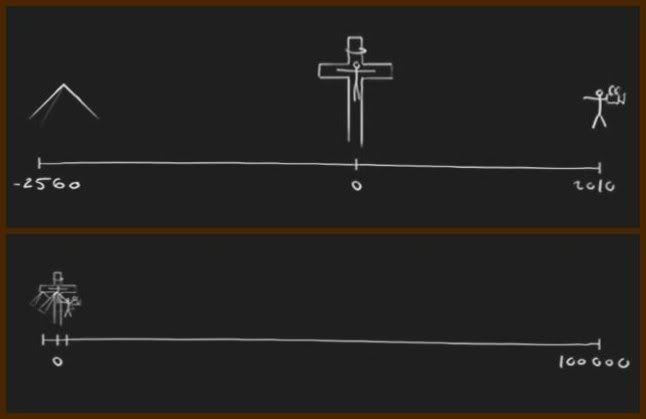
What interests me is not noly nuclear problems, but also more philosophical problems. There are two problems. First, the problem of our finitude. We must have a responsibility for our many actions, but this kind of storage system betrays our responsibility for unresponsibility. Unresponsibility means not inability to respond, but impossibility to respond. We have to be, but are not able to respond all of our descendants. In the first place, essence of our existence as human beings is unresponsible. It is ultimate time consciousness over death and limit of our half-and-half technology that testify this factical and finite essence of our existence. It is called "intergenerational ethics", but the problem itself is much deeper. We are finite beings that have to be responsible for our unresponsibility.
Second problem is hermeneutical, how to inform of danger people 100,000 years or more into the future. A way of information or communication itself may have changed beyond recognition. Actually, languages, knowledge and symbols are all changing even now.There is almost few way that would be durable enough for the warning message to survive. What is universal and unchangable communication?
Universal and unchangable communication is almost impossible. It is more suitable for our human beings to take hermeneutical thinking. Hermeneutics is the study of interpretation theory, and can be either the art of interpretation, or the theory and practice of interpretation. It is well known for Bible-hermeneutics. Philosophically speaking, hermeneutics is a way of our existence as human beings, according to M. Heidegger and H.-G. Gadamer. Hermeneutics is the way for finite human beings, regardless of telling us evangel or disaster. But hermeneutics is a kind of art or techne of thinking, too. We are beings that have both possibilities and impossibilites to live, right from the start. And we are beings that have to need teche or technology in order to live, too.
2011年3月29日火曜日
Sustainability and Humanities Workshop
Sustainabilityと人文知 第3回ワークショップ
タイトル 社会知からサステイナビリティを考える I
テーマ 「社会共通資本」と「世代間公平性」
日時 2011年3月31日(木)13:00-17:30
場所 東京大学農学部 弥生講堂アネックス セイホクギャラリー
プログラム 司会;松本三和夫(東京大学大学院人文社会系研究科教授;社会学)
0. ワークショップの主題説明 松本三和夫(13:05-)
1. 報告1(13:10-)
報告 鈴村興太郎(早稲田大学政治経済学術院教授)
「Intergenerational Equity and Sustainability :
From the Viewpoint of Normative Economics」
討議 川本隆史(東京大学大学院教育学研究科教授;倫理学)
2. 報告2(15:20-)
討議 似田貝香門(東京大学名誉教授)
「新たなエコノミーとサステイナブルな社会形成;危機を乗り越えるため」
3. 総合討論(16:35-)
懇親会 18:00- 「アブルボア東京大学向ヶ岡ファカルティハウス」
http://www.abreuvoir.co.jp/2009/UT
http://www.sus-humanities.l.u-tokyo.ac.jp/workshop/420
タイトル 社会知からサステイナビリティを考える I
テーマ 「社会共通資本」と「世代間公平性」
日時 2011年3月31日(木)13:00-17:30
場所 東京大学農学部 弥生講堂アネックス セイホクギャラリー
プログラム 司会;松本三和夫(東京大学大学院人文社会系研究科教授;社会学)
0. ワークショップの主題説明 松本三和夫(13:05-)
1. 報告1(13:10-)
報告 鈴村興太郎(早稲田大学政治経済学術院教授)
「Intergenerational Equity and Sustainability :
From the Viewpoint of Normative Economics」
討議 川本隆史(東京大学大学院教育学研究科教授;倫理学)
2. 報告2(15:20-)
討議 似田貝香門(東京大学名誉教授)
「新たなエコノミーとサステイナブルな社会形成;危機を乗り越えるため」
3. 総合討論(16:35-)
懇親会 18:00- 「アブルボア東京大学向ヶ岡ファカルティハウス」
http://www.abreuvoir.co.jp/2009/UT
http://www.sus-humanities.l.u-tokyo.ac.jp/workshop/420
Trends in various actors after nuclear accident
Trends in various actors after nuclear accident from Japan for Sustainability.
NISA(Nuclear and Industrial Safety Agency)
NISA(Nuclear and Industrial Safety Agency)
http://www.nisa.meti.go.jp/english/index.html
http://www.nisa.meti.go.jp/english/index.html
IAEA Fukushima Nuclear Accident Update Log
IAEA Fukushima Nuclear Accident Update Log
http://www.iaea.org/
http://www.iaea.org/
2011年3月24日木曜日
Press Release from Cabinet Office, Government of Japan, 3/23/2011.
Press Release from Cabinet Office, Government of Japan, 3/23/2011, using System for Prediction of Environment Emergency Dose Information.

http://www.nsc.go.jp/info/110323_top_siryo.pdf
http://www.japanfs.org/en/files/NSCPressReleaseMar232011SPEEDIEnglish.pdf
http://www.nsc.go.jp/info/110323_top_siryo.pdf
http://www.japanfs.org/en/files/NSCPressReleaseMar232011SPEEDIEnglish.pdf
登録:
投稿 (Atom)